The cosmetics industry spans globally, as individuals everywhere search for ways to enhance their looks. Within this huge and ever-expanding market, the United Arab Emirates emerges as a particularly lucrative hub for business owners and investors. Yet, importing makeup products into the UAE demands serious attention to requirements and regulations.
This complete guide aims to shed light on the process of successfully importing makeup products to Dubai, UAE. By understanding the process & regulations, fulfilling the requirements, and ensuring compliance, you’ll confidently complete the process and steer clear of delays. So, without any further delay, let us jump right into it.
About ESMA (Emirates Authority for Standardization and Metrology)
ESMA (Emirates Authority for Standardization and Metrology) is a government agency established by Federal Law No. 28 of 2001 to oversee the quality and safety of personal care products in the UAE. They’ve launched a program called the Emirates Conformity Assessment Scheme (ECAS) to classify and certify makeup products, whether imported or locally made. You will need to register with ESMA via ECAS and obtain a Certificate of Conformity for your cosmetics before you can import them into the UAE.
This certificate ensures that your makeup products meet safety standards which is why the UAE enforces this program. Through the ECAS program, cosmetics undergo verification to confirm they’re safe for consumers in Dubai, whether imported or locally produced before they are sold in the country.
Required Documents for ESMA Certification
The ESMA certification process has several essential requirements. These cover labeling, health, packaging, safety, and metrology standards. If your makeup products meet the ECAS specifications, ESMA will issue an ECAS Certificate of Conformity, allowing your goods to be imported and sold in the Emirati markets. This certificate is crucial, as ports and customs departments will only allow goods with this certification to enter the country and be sold.
To apply for ESMA product registration in the UAE, applicants must submit the necessary documents as demanded by the authority along with their application.
Here are all the necessary documents that importers should provide to obtain a Certificate of Conformity:
- Health and Safety report related to the makeup product
- Test or certificate report from an accredited laboratory (Notified bodies) related to some heavy metal and preservatives
- Valid trade license
- Free sale certificate issued by the competent authority in the country of origin
- Representative label and artwork of the makeup product
- Document from the manufacturer having details of the used ingredients and their percentages
Process of Registration
The registration process for obtaining a certificate of conformity involves the following steps:
- Registering the applicant by visiting the ESMA website.
- Submitting the application form along with the required documents.
- Conducting a conformity assessment of the makeup product to ensure it meets the approved standards set by ESMA.
- If the products meet the requirements and the applicable official service charges are paid, they are registered and ESMA issues an ECAS Certificate of Conformity.
The ECAS Certificate of Conformity serves as proof that the makeup product has been approved through ESMA by the Federal Government of the UAE. It remains valid for one year and must be renewed at least one month before its expiry date.
Product registration in Dubai is a crucial step for businesses looking to import makeup products into the UAE market. One should ensure compliance with local regulations by registering their products with the Dubai Municipality.
Who Should Register Products in the UAE with ESMA?
According to regulations, only companies incorporated in the Emirates are allowed to register and certify their makeup products with the ESMA. This includes both free zone and mainland corporate entities, provided that their trade license activity is relevant to importing makeup products.
Companies set up in the UAE free zones may appoint local distributors if they want to participate in this process and sell makeup products outside the free zone. Similarly, international companies can also take part by appointing a local distributor. The local distributor must be a UAE-registered company with a valid license.
How to Import Makeup Products to Dubai, UAE?
Following are the steps to import makeup products into the United Arab Emirates:
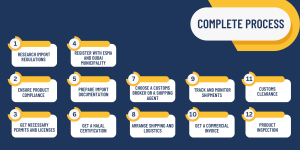
1. Research Import Regulations
Firstly, you need to research the import regulations and requirements for makeup products in the UAE. You should reach out to relevant authorities or check the UAE government’s official website to learn about the necessary documentation and specific rules for importing cosmetics.
2. Ensure Product Compliance
You must make sure that the makeup products you intend to import comply with UAE standards and regulations. This involves verifying that the cosmetic products fulfill any specific labeling and packaging requirements, are correctly labeled with instructions and ingredient lists, and are safe for use.
3. Get Necessary Permits and Licenses
Depending on the type of makeup products you plan to import, you may require licenses and permits from the UAE Ministry of Health and Prevention (MOHAP) and other regulatory bodies. You’ll also need to acquire a trade license from the UAE Ministry of Economy. This license enables you to import and sell makeup products within the country.
Additionally, some makeup products may need additional approvals, especially those classified as medical products or having active ingredients.
4. Register Your Makeup Products with the Emirates Standardization and Metrology Authority (ESMA) and Dubai Municipality
You need to register your makeup products with the ESMA as well before importing them. Registering with them will give you a certificate of Compliance. The ESMA registration process is explained above in detail.
After obtaining a Certificate of Compliance from ESMA, both locally produced and imported makeup products must be registered with Dubai Municipality or the relevant municipality in the UAE, depending on your company’s location and where you intend to sell your products. They also need to register with the Ministry of Health and Prevention (MOHAP).
It should be done before your products can be marketed for sale on the Emirati market. This registration process may include submitting laboratory test reports, product information, manufacturing and expiry dates, and other documentation to prove compliance with defined regulatory standards by the authorities.
Upon approval, a product registration certificate is issued, allowing the importation of registered makeup products into the UAE. These certificates must be renewed every two years, and routine inspections of the cosmetics are conducted to ensure compliance with quality and safety standards.
It’s crucial to understand that only a company registered in the UAE can proceed with makeup product registration. This could be the local distributor, importer, or manufacturer of the cosmetics.
Comply with Product Labeling Requirements
You have to make sure your makeup products meet the labeling requirements specified by UAE regulations before importing them. The product labels must be in English or Arabic and should include
- Manufacturer information
- Product details
- any necessary instructions or warnings
- Product name
- Ingredients
- Weight or volume
- Manufacturing date
- Shelf life
- Expiration date
- Batch number
- The registration number provided by the Ministry of Health and Prevention
- Other essential information
5. Prepare Import Documentation
To import makeup products into the UAE, you may need to gather the following documentation:
- Safety data sheets (SDS) for hazardous substances (if applicable)
- Commercial invoice
- Packing list
- Import/export declaration
- Product registration certificates (if required)
- Certificate of analysis (for some makeup products)
- Certificate of origin
6. Get a Halal Certification
In the UAE, being a Muslim country, there are specific regulations for imported makeup products. One such requirement is obtaining a Halal certification. Though it is not compulsory, some types of makeup products do require it. The Halal-certified makeup products show that they have been manufactured in compliance with Islamic law.
7. Choose a Customs Broker or a shipping agent
Then, you should select a freight forwarder, customs broker, or shipping agent with expertise in makeup product imports or international shipments. These professionals can assist you throughout the import process by following customs procedures, fulfilling logistics requirements, and managing shipment documentation. They will also ensure your products are handled properly and delivered punctually.
8. Arrange Shipping and Logistics
Choose a dependable shipping method and organize transportation for your makeup products to the UAE. Sea shipment is slower but more economical whereas air shipment is quicker but comes with a higher cost.
9. Track and Monitor Shipments
You should track and monitor your makeup product shipments closely until they arrive at their destination in the UAE. It is recommended to stay in touch with your shipping agent or customs broker to handle any potential delays or issues during transit or customs clearance.
10. Get a Commercial Invoice
Post that, you need to have a commercial invoice ready. This document should provide information about the product value, brand, type, quantity, and other comprehensive details of the makeup products. The invoice is necessary for customs clearance procedures in the UAE.
11. Customs Clearance
You must declare your makeup products at customs when importing them into the UAE. You’ll need to provide the following information to do so:
- The value of the makeup products
- The country of origin of the makeup products
- The name and quantity of the makeup products
Once your makeup products reach the UAE, they will undergo customs clearance procedures. The process includes submitting essential documents like the packing list and commercial invoice to customs authorities and paying any relevant taxes and duties on your imported cosmetics. The amount of duties and taxes will vary based on the makeup products’ value and country of origin.
Your shipping agent will manage the customs clearance process in the origin country and can also handle it in Dubai.
12. Product Inspection
UAE Customs Authority can also conduct inspections to ensure compliance of your products with regulations and meet the required standards. If your products fail to meet the required standards, they will be denied entry into the UAE.
After your cosmetics have been cleared by customs, you can proceed to distribute them to retailers in the UAE or sell them in your stores.